|
||||||||||||||||||||||
The Origins of Valikari™While the Valikari tongue achieved widespread renown across the expanse of Tales of the Misplaced, its ancient roots actually originated in the realm of Flames of the Phoenix. Though these stories take place in entirely separate universes, they share this foundational linguistic bond. Valikari™ Open Source Language License & Terms of UseThe Valikari™ language is the foundational linguistic heart of Flames of the Phoenix and the Tales of the Misplaced™ series. To support the indie publishing community, the speculative fiction writer space, and world-builders worldwide, the core structure, dictionary assets, and grammar rules of Valikari are distributed free of charge under an Open Source Creative License. Use of this language in any original creative or commercial work indicates your implicit consent to the following terms, conditions, and restrictions: Core Community Rules (The 5 Commandments)
Macro-Universe Intellectual Property Restrictions
|
||||||||||||||||||||||
|
Downloads |
||||||||||||||||||||||
|
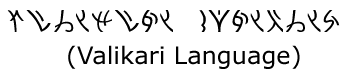
General InformationThe written language of Valikari is logical and phonetic in the sense that every Valikari letter represents one sound only. Every sound used in Valikari is represented by a single letter. What does this mean? In English, many letters represent more than one sound. For example, the letter C can sound like an S or like a K. (Perversely, it has no sound of its own.) This means that there are two letters that sound like an S and, if you count Q, three letters that sound like a K. In Valikari, you have one character that sounds like an S and one character that sounds like a K. Also, in English there are sounds represented by multiple letters that are not a culmination of the sounds of the individual letters. In Valikari, the sound for the English CH is represented by a single character. As is SH, TH (hard,) TH (soft) and NG. Since multiple letters do not assume a different sound, successive vowels are pronounced individually. So, "surielin" is pronounced soo-ree-ay-leen. The Valikari Language utilizes 34 unique sounds and therefore, the alphabet contains 34 unique characters: 9 vowels and 25 consonants. The number of vowels may surprise you until you realize that in English, the letter A alone represents at least 4 separate vowel sounds. When writing Valikari words with English characters, it will be necessary to try to spell it phonetically in English. Since some of the sounds don't exist in English, a bit of flexibility is required, such as using JH for the soft J sound. Since this sound so closely resembled a ZH I opted to only use one of them in the language. The script at the top of the webpage says "Valikari Surielin." Surielin [su-ri-el-in] is the Valikari work for "language." I did create a true-type font using the Valikari alphabet (but the file stopped working some time ago.) Since we only have 26 letters in our alphabet (actually 52, since we have upper and lower case letters) as opposed to the Valikaran 34, you cannot blithely type away with the new font and have it work for you. In Valikari, there is no difference between upper and lower case letters. In many cases, using upper or lower case would produce the same result using this font. However, some of the additional letters would be assigned assigned to upper case keys; this can cause problems if your autocorrect capitalized words without you realizing it. Another option would have been to incorporate pronunciation symbols for the English characters and have them specifically correspond to the Valikari character. I elected not to do this since most people don't know how to utilize pronunciation symbols while typing. If some scholarly type wishes at some later date to define the Valikari sounds using English characters and pronunciation symbols to correct my English spelling of Valikari words I have no objection.
Language RulesThe following are some of the established language rules for Valikari: |
||||||||||||||||||||||
|
Pronouns and Masculine/Feminine: One difference to note between Valikari and English is that while the language will allow you to specify gender, Valikari also provides non-gender specific personal pronouns. If one needs to specify "that male person" or "that female person" he/she may do so. However, the Valikari word su simply means "that person" without regard to gender, replacing most instances of "he" or "she." This avoids the clumsy "he/she" method of showing that either or both genders are indicated. This attitude is carried forward and there are no distinctive masculine or feminine forms for words. When combining roots or adding prefixes/suffixes to create new words: when doing so creates a double letter, the letters may be separated by an apostrophe. |
||||||||||||||||||||||
|
Verb handling:
|
Noun handling:
Plural: se-
|
|||||||||||||||||||||
Adverbs "-ly" equivalents are not used. Instead of adding this suffix, the word is preceded by the word so, which means "with." |
||||||||||||||||||||||
Adjectives To formulate an adjective from an existing word, add the suffix -kash. |
||||||||||||||||||||||
Sentence Structure Sentences follow the general subject + verb + object sequence. Passive voice allows for an object + verb sequence. Utilizing verb tenses we can get the following constructions: |
||||||||||||||||||||||
|
|
|||||||||||||||||||||
|
|
|||||||||||||||||||||
|
|
|||||||||||||||||||||
|
||||||||||||||||||||||
|
Articles: Articles are usually implied, but may be stated for clarification or emphasis. Usually a singular noun is sufficient without stating "a" or "the." |
||||||||||||||||||||||
Questions Dzu can be used as a prefix to indicate a question. It can also be placed at the beginning of a sentence (followed by a comma) to indicate that a question is being asked. |
||||||||||||||||||||||
However, since forms of the verb "to be" indicate the subject of the verb, the subject is normally omitted in all but the most formal spoken conversation: Dzu al doran ko bo doran.
|
||||||||||||||||||||||
"Who are you?" could be correctly stated in either of two ways:
Or for emphasis: | ||||||||||||||||||||||
|
Pronunciation: Pronunciation is most similar to Japanese or Spanish. Some of the sounds do not exist in one or the other of the languages. |
||||||||||||||||||||||
|
To Transform a Word Into a Noun
Examples using ssho, which means "to look or see."
|
Compound word structure: Words may be combined to form new words. Sequence of root components is more of a sound issue than a grammatical one. How further adding of suffixes/prefixes affects the new word combination must be taken into account. This is particularly important when one of the words has both a noun and verb form, as is the case with osoveran,shown below in noun form as osoveranira as opposed to veranosoira or veraniraoso.
|
|||||||||||||||||||||
|
Sounds and the AlphabetThe charts below show which keyboard values are assigned to the Valikari characters and the sounds that the characters represent. Above each Valikari character is the key to which the character value is assigned. Below the Valikari character is a pronunciation hint. Note that some of the characters are assigned to more than one keyboard key. You will note that Valikari utilizes neither silent letters nor diphthongs. Every letter receives full pronunciation. |
||||||||||||||||||||||
|
Vowels: 
Consonants: 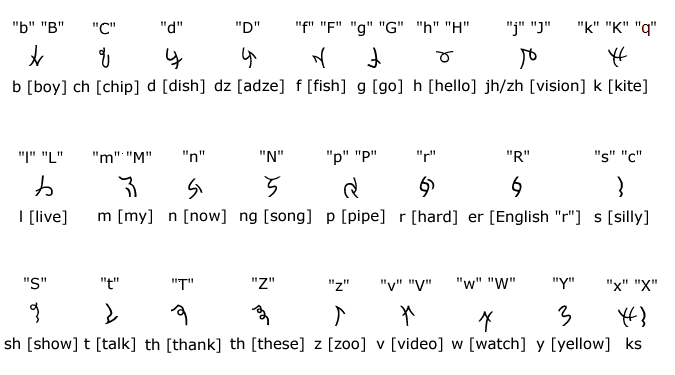
Numbers and Symbols: 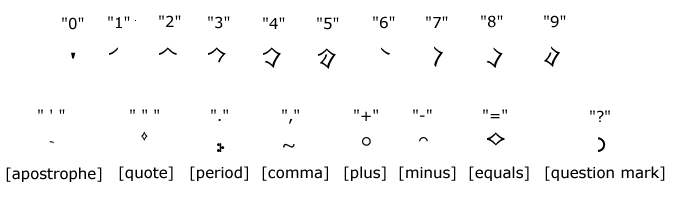
|
||||||||||||||||||||||